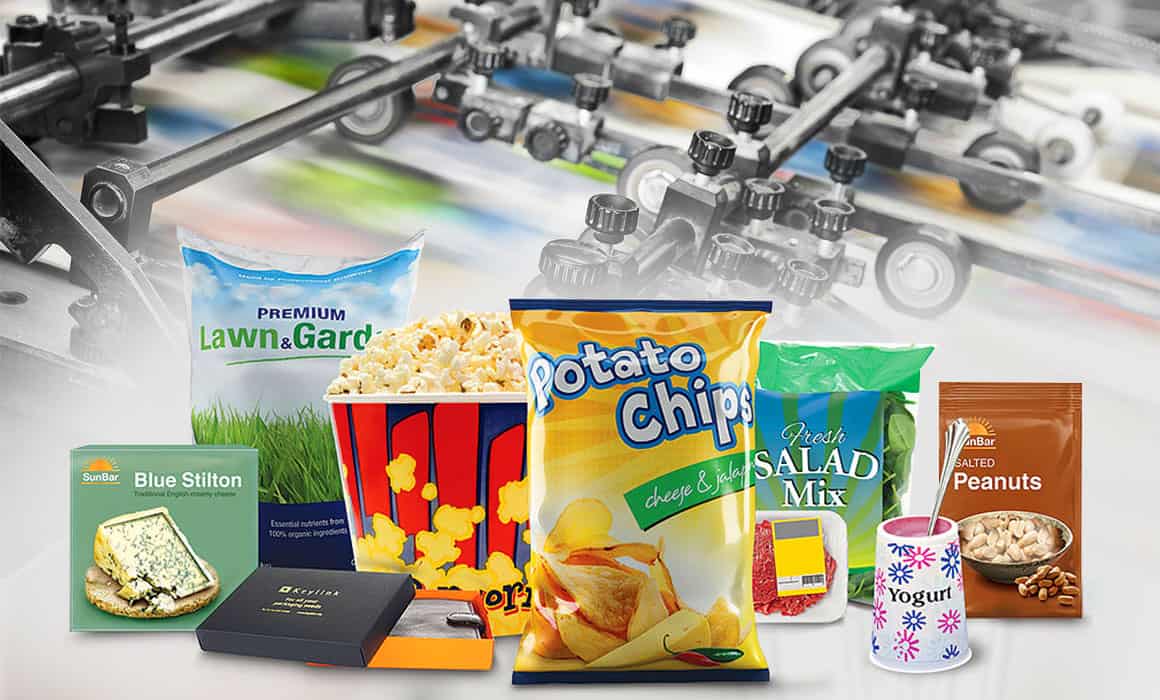
Graphic design, aesthetic ideas, and printing techniques can greatly enhance the quality of product packaging. To ensure that your commissioned design has the same impact on the shelf, it must first be prepared for the chosen printing technique, and the prepress repro work must be carried out correctly. You should therefore begin by identifying the right printing technique for your product, then have your packaging created by a designer who understands that process.
A design may not be suitable for every printing technique. Successful packaging design is created with the printing process in mind.
There are generally 5 different types of printing that can bring your packaging designs to life:
1- Offset printing
Offset printing is used on paper of many different weights. It is the most common printing process and is widely chosen for products such as business cards, magazines, books, newspapers, posters, and display boxes. It is one of the most versatile methods for packaging and can be used for labels and folding cartons in a wide range of sizes.
2- Gravure printing
This is a recessed printing process in which machines engrave designs onto a metal plate using a diamond-tipped tool. During printing, ink is wiped from the surface of the cylinder, leaving ink in the recessed areas to be transferred onto the packaging and form the image. Gravure is commonly used for crisps, chocolate, biscuits, dry foods and nuts, powdered milk, coffee, and all kinds of food packaging. As these examples suggest, it is used for vibrant, eye-catching products. Print quality is another reason for choosing gravure, although the cost of the printing forms means that it is generally preferred for high-volume jobs.
3- Flexographic printing
Flexographic printing has a very important place in the packaging industry. It can be used for many products packaged in PP and OPP materials, including pasta, pulses, frozen foods, and sweets. Packaging printed using this technique is flexible, hygienic, and glossy in appearance. Although its quality is lower than gravure printing, it is highly economical in terms of plate costs and the speed with which production can begin.
4- IML printing
IML printing is also known as label printing. This process combines offset-printed material with plastic through injection moulding. Packaging for hazelnut or peanut butter, yoghurt, cheese, milk, puddings, and desserts can be produced using this technique. The label becomes integrated with its container, protecting it from damage. As these examples show, IML is a type of printing used mainly for food products.
5- Screen printing
Screen printing is the general name given to printing on materials such as glass, plastic, metal, and wood. In principle, a design is applied to silk stretched over a frame and exposed under suitable conditions, allowing ink to transfer to the product only through the areas exposed to light.
6- Digital printing
Digital printing is the process of using digital printing machines to print computer-created designs onto materials such as paper, canvas, fabric, synthetics, wood, and stone. Because no mould or printing plate is used, it is a suitable solution for variable and short-run product printing.